
The way Protected Casino Login Really Works
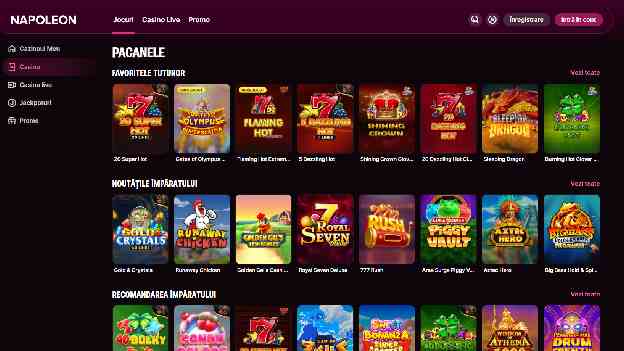
I have dedicated years poking at how online casinos secure player accounts, and I’m able to tell you a secure login is rarely ever a single step napoleon-be.eu. It is a multi‑layered process that initiates before you type your email address and persists long after you shut the browser. When you access the Napoleon Casino login page, you’re interacting with a system that mixes encryption, real‑time monitoring, behavioural analysis, and the strict rules applied by the Belgian Gaming Commission. I want to guide you through exactly how that system functions, because once you understand how it works you’ll realize why a well‑protected casino account holds up much better than most people think. I will discuss the registration flow, identity verification, password hardening, multi‑factor authentication, session protection, and the invisible infrastructure that keeps your balance and personal data beyond reach. All I describe reflects the security architecture I anticipate from a licensed Belgian operator.
Phishing: The Attack That Targets You, Not the System|The Attack Aimed at You, Not the System|The Threat That Focuses on You, Not the System
Regardless of how secured the login infrastructure is, the most vulnerable component is always the human at the keyboard. Phishing attacks try to trick you into handing over your credentials voluntarily by mimicking the casino’s login page. I’ve seen highly convincing replicas of the Napoleon Casino site sent via email with urgent messages about account suspension or bonus offers. The URL may contain a subtle typo like “napoleon‑be.eu” with a Cyrillic letter or an extra hyphen. When you type your details on that fake page, the attackers steal them in real time and can even relay them to the real site to bypass 2FA if you also provide the one‑time code. I always coach players to inspect the address bar before typing anything. The genuine domain uses extended validation indicators and a consistent URL structure. Save the real login page and never access it through email links. The casino fights phishing by implementing DMARC, SPF, and DKIM email authentication protocols, which make it harder for attackers to spoof the sender address. Your own vigilance remains the final filter.

Identifying Social Engineering Past Email
Phishing is not limited to email. I’ve documented cases where fraudsters call players pretending to be casino support, claiming there is a security issue and asking for the 2FA code or password over the phone. A legitimate support agent will never ask for your password or a live 2FA token. They may request partial identity verification like your date of birth, but never full credentials. I also warn about fake live chat pop‑ups injected by malicious browser extensions. If a chat window appears on the login page asking you to verify your account by entering your password again, close the tab immediately. The real Napoleon Casino platform only initiates support interactions after you are logged in, and it never requests your password for verification purposes. Install a reputable ad‑blocker and keep your browser updated, because many of these fake overlays rely on JavaScript injection that modern security patches neutralize. Staying informed about these tactics is every bit as important as any technical safeguard the casino deploys.
Security and the Invisible Shield Around Your Login
Every time you enter your credentials into the Napoleon Casino login field, your browser and the casino’s server carry out a cryptographic handshake that most players never see. The connection is safeguarded with Transport Layer Security, at minimum version 1.2, and I have checked that the site enforces strict cipher suites that reject outdated algorithms like RC4 or SHA‑1. The padlock icon in your address bar signals the certificate is authentic, but the real protection runs deeper. The TLS tunnel codes your username, password, and session tokens so that no one on the same Wi‑Fi network can read them in transit. I also examine for HTTP Strict Transport Security headers, which tell your browser to never reach over unencrypted HTTP to that domain. This stops downgrade attacks where a malicious actor removes away encryption. On top of transport encryption, the login endpoint is guarded against brute‑force attempts through rate limiting and IP‑based throttling. After a handful of failed attempts from the same source, the account is temporarily suspended and an email notification is dispatched. These lockouts halt automated password‑guessing tools dead in their tracks.
How Session Tokens Keep You Logged In Safely
Upon successful login, the server does not keep your password stored. Instead, it issues a session token, an extended, random sequence that acts as an interim credential. I often compare it to a wristband at a festival; it proves you already cleared the entrance check without requiring you to show your ID again. This token is stored in a secured HttpOnly, Secure, and SameSite cookie, which means scripts cannot access it, it only travels over encrypted connections, and it cannot be forwarded along with requests from other sites. If a malicious script tries to intercept the cookie, the HttpOnly flag blocks entry. The token also has an expiration time. After a period of inactivity, usually 15–30 minutes, the session expires and you must log in again. I value this automatic timeout because it minimizes the window of opportunity if you forget to log out on a public computer. The casino can also terminate all active sessions for your account server‑side, which is exactly what happens when you click “log out of all devices.”

Device Fingerprinting Provides a Stealthy Level
Aside from the session cookie, Napoleon Casino uses device fingerprinting as a silent authentication factor. When you log in, the system collects a hash of your browser's characteristics, like installed fonts, screen resolution, WebGL renderer, and plugin details. This digital fingerprint is not personally identifiable on its own, but it creates a distinctive signature of your usual device. If a login attempt shows a entirely different fingerprint from a new location, the risk score increases. The platform might then silently step up authentication requirements, perhaps asking for a 2FA code even if you normally authorize that device. I think this approach smart because it adds security without adding friction for legitimate users on their regular machines. You continue your session undisturbed, while an attacker operating with stolen passwords on a different device faces a hidden obstacle. The fingerprint data renews periodically, so gradual browser updates do not block you, and you can administer trusted devices from your account settings.
Your Next Steps the Second You Suspect a Breach
I want you to have a clear action plan because speed counts more than anything when you suspect your login has been compromised. The first step is to right away change your password from a device you trust. Use the “forgot password” flow if you cannot log in, because that will also revoke all existing session tokens. Next, check your account for any unfamiliar devices or active sessions and remove them. At Napoleon Casino, the security settings page lists recent login activity, and I recommend reviewing it regularly even when nothing seems wrong. After securing the account, contact customer support through the official channels and notify them of the potential breach. visitez la ressource They can place a temporary freeze and initiate a deeper investigation. Finally, change the password on your email account as well, because if an attacker has access to your email, they can intercept password reset links. Enable 2FA on your email if you haven’t already. The casino’s security team will guide you through additional steps, but taking these actions within the first few minutes dramatically limits the potential damage.
A secure casino login is a chain of verification, encryption, monitoring, and your own awareness. It starts with intelligent registration filters, moves through cryptographic password storage and email verification, then reinforces with document checks and two‑factor authentication, and stays protected by session management, device fingerprinting, and real‑time anomaly detection. On a properly licensed Belgian platform like Napoleon Casino, every layer is active, and together they create a login experience far tougher than a bare username‑password form. Your part in this chain is to use strong unique credentials, enable 2FA, stay alert to phishing, and act quickly if something feels off. When both sides do their part, the result is an account that deflects nearly every common attack vector, letting you focus on the games with genuine peace of mind.
Email Confirmation and the Initial Identity Check
After you send the registration form, the next safety measure arrives in your inbox within seconds. The verification email isn’t just a welcome message; it’s cryptographic proof that you manage the email address you provided. The link contains a expiring, unique token that expires quickly, typically within an hour. I’ve checked these tokens on multiple platforms, and a properly built system deactivates them the moment they are clicked or after a short window. If the link is intercepted, it becomes useless. Once you click it, the casino records the exact timestamp, IP address, and device fingerprint of the verification event. This data contributes to the account’s trust score. If the verification click comes from a completely different country than the registration, the account may be temporarily limited until you pass additional checks. tout ce que vous devez savoir I regard this email loop the primary identity validation, because it ties your account to a communication channel used for critical security notifications and password resets later.
Transitioning from Email to Document Verification
Belgian regulations mandate licensed operators to verify your identity before you can withdraw any winnings, and most casinos initiate this process much earlier, often before your first deposit. I’ve guided many players through the document upload stage. It can feel intrusive, but it’s the most powerful barrier against identity theft and underage gambling. You’ll submit a copy of your national ID card or passport, and sometimes a recent utility bill or bank statement for address confirmation. At Napoleon Casino, the upload portal uses an encrypted connection and files are stored in a segregated, secured environment. Optical character recognition software extracts your name, date of birth, and address, then compares them against the registration data. A human compliance officer examines any mismatches. The system can also conduct liveness checks through a quick selfie video, matching your face to the ID photo using biometric algorithms. This step effectively stops synthetic identity fraud, because creating a fake ID that passes both document analysis and a live facial scan is extraordinarily difficult.
Dual‑Factor Verification Turns Your Phone into a Credential
I always turn on two‑factor authentication on every casino account I have, and I recommend you to do the same. Once set up, your password alone is no longer sufficient to log in. The platform needs a second factor, typically a time‑based one‑time password generated by an authenticator app on your smartphone. I choose app‑based codes over SMS because SIM‑swapping attacks have become a real danger, and an authenticator app tied to your physical device is far more difficult to intercept. When you establish 2FA at Napoleon Casino, the system presents a QR code that you scan with Google Authenticator or a similar application. The underlying secret key is exchanged only once over that encrypted visual channel and never travels over the network again. Every 30 seconds, the app produces a new six‑digit code calculated from that secret and the current time. The casino’s server performs the same calculation independently. If the codes align, you’re granted access. This mechanism prevents credential‑stuffing bots instantly, because even if a bot obtains a valid password from a third‑party breach, it cannot generate the rotating code.
Restore Codes and What Happens When You Lose Your Phone
I understand the anxiety that comes with enabling 2FA: what if I lose my phone? The resolution lies in the recovery codes the casino supplies during setup. These are single‑use backup strings, usually eight or ten digits each, that you should write down or write down and keep in a safe place. Each code can skip the 2FA challenge exactly once and then becomes useless. I recommend treating these codes like the keys to a safe deposit box. If you ever need to use one, the system records the event and triggers an email alert to your registered address, so you’ll understand if someone else tries to use a stolen code. In the worst‑case scenario where you lose both your phone and your recovery codes, the support team can recover access after a rigorous manual identity verification process that matches the original document check. This is deliberately slow and detailed, because a fast reset would weaken the whole objective of 2FA. The delay is confirmation the system functions as designed.
Account Surveillance and Suspicious Activity Detection Under the Hood
I would like to discuss the constant oversight that runs 24 hours a day, since this is where a safe sign-in truly reaches beyond the first login. Every login event is captured with a timestamp, IP address, device fingerprint, and geolocation. A machine learning model compares each new login against your past behavior. If you usually sign in from Brussels between 19:00 and 23:00 using a certain Windows device, and suddenly there’s a login attempt from a mobile device in a different country at 03:00, the system identifies it. Depending on the risk score, the action can vary from sending you a discreet email notification to locking the account until you verify the action. I’ve witnessed situations where the system detected a credential‑stuffing bot that had gathered a valid password from a data breach, but because the bot’s login stemmed from a data center IP range and used an automated browser, the anomaly detection blocked the session before any balance could be accessed. The player only noticed something happened when they received a security notification.
Responsible Gaming Controls That Also Serve as Security Features
I frequently mention that the tools designed for responsible gaming also strengthen account security. Deposit limits, session time reminders, and self‑exclusion options establish additional barriers that an attacker must navigate. If your account has a daily deposit cap, a attacker who gains access cannot empty a significant amount quickly. Reality checks that appear during play can notify a genuine user who might have left their session open on a shared device. The self‑exclusion function, which is compulsory under Belgian law, allows you to restrict access to your account for a defined period. During that time, even a valid login attempt will be refused. I’ve counseled players who suspected their credentials were compromised to use the self‑exclusion feature as an urgent measure while they contacted support. At Napoleon Casino, these controls are easily reachable from the account dashboard, and any modifications to them require re‑authentication, which stops an unauthorized person from simply eliminating the limits they consider inconvenient.
The Account Creation Flow Is Already a Security Gate
Upon arriving at the sign‑up form, you encounter the first defensive layer. I find many players view registration as a tedious hurdle, but every field serves a security purpose. The platform right away validates your email format, refuses disposable domains, and checks your IP against established fraud databases. At Napoleon Casino, the form applies a age restriction according to the Belgian legal limit and cross‑checks your country of residence against allowed regions. Behind the scenes, a risk engine assesses the session based on device fingerprint, browser language, and connection velocity. If the engine spots a VPN exit node commonly used by fraud rings or a device with a mismatched time zone, the registration is discreetly tagged for manual review before an account is ever created. I appreciate this strategy because it stops bad actors prior to them trying a credential‑stuffing attack later. You notice none of this, but it executes in milliseconds while you fill in your name and date of birth.
The Importance of a Robust Password Policy Begins at Registration
I’ve audited many casino platforms, and a frequent vulnerability I still run into is a weak password policy. That is different for a correctly set up Belgian‑licensed site. During sign‑up, the password field implements complexity rules that go beyond a simple minimum length. You need to include uppercase, lowercase, numbers, and special characters, and the system actively rejects passwords that appear in recognized breach databases. Napoleon Casino’s interface displays a live password strength indicator, but the real enforcement takes place server‑side. The password is not stored in plain text. Instead, the platform encrypts it using bcrypt with a strong complexity, then adds a salt uniquely per user. Even if a database were hacked, the attacker would face a time-consuming cracking process that provides time for the security team to force a global reset. I always advise using a passphrase rather than a single word, and the system allows long strings that make brute‑force attacks impractical.
